
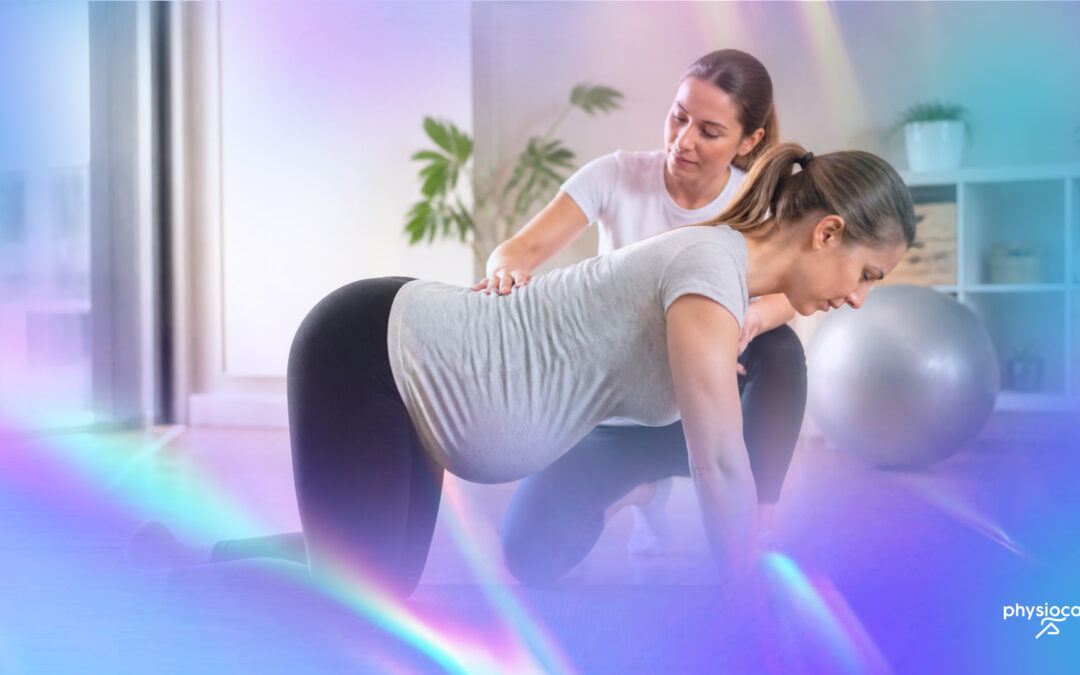
Somewhere between the first scan and the first sleepless night, a lot of women get told two conflicting things: rest as much as you can, and get your body back as soon as you can. Neither instruction is much use on its own, and both miss the point of what pregnancy and postnatal physiotherapy is actually there for.
It’s worth saying plainly: this isn’t about fixing something that’s broken. Your body isn’t malfunctioning because your core feels different after birth, or because your back aches in the third trimester. Physiotherapy through pregnancy and the months after it isn’t a treatment you receive once and move on from. It’s a holistic form of management, one that adapts alongside you through pregnancy, delivery, and recovery, looking at your whole body, your energy, your mental load, and your day-to-day life rather than isolating one symptom at a time.
Staying Active While Your Body Is Changing
For most uncomplicated pregnancies, staying active isn’t just permitted, it’s genuinely protective. Exercise has no absolute contraindication in early pregnancy, and continuing to move in a way that suits your changing body supports better sleep, mood, blood sugar regulation, and an easier delivery and recovery.
What “staying active” looks like does shift as pregnancy progresses:
- In the first trimester, most women can continue much of what they were doing before, adjusted for energy levels and nausea rather than any strict medical limit.
- As the bump grows, balance, joint laxity from pregnancy hormones, and a shifting centre of gravity mean certain positions and higher-impact movements need modifying, not necessarily stopping altogether.
- Pelvic floor training becomes a daily habit worth building early rather than one you scramble to learn after delivery. Regular pelvic floor work through pregnancy genuinely reduces the risk of common postpartum pelvic floor problems.
None of this needs to be complicated, but it does need to be individualised. What’s appropriate changes week to week, and a generic prenatal workout video has no idea what your specific body is dealing with.
What’s Actually Happening to Your Core
The abdominal separation so many women notice after birth, known as diastasis recti, is a natural stretching of the connective tissue between the two sides of the abdominal muscles to accommodate a growing baby. It isn’t damage, and for most women it isn’t a permanent problem either. Some degree of separation is present in the majority of postpartum women, and it typically improves substantially in the weeks and months following delivery.
Where it becomes worth addressing directly is when the gap remains wide, when it’s linked to ongoing lower back pain similar to general back pain physiotherapy patients describe, or when everyday tasks like lifting your baby or getting out of bed feel unstable. In those cases, targeted rehabilitation makes a genuine, measurable difference.

Rebuilding Your Core Safely, in the Right Order
Crunches are usually the first thing people reach for, and usually the wrong place to start. Evidence-based diastasis recti rehabilitation works best as a progression, not a single exercise repeated endlessly.
Reconnect before you strengthen
In the early weeks, the priority is re-establishing the coordination between your deep abdominal muscles, pelvic floor, and breathing. This groundwork matters more than intensity at this stage.
Load gradually and functionally
As coordination returns, exercises should progress toward the real movements of daily life with a baby: bending, lifting, carrying, and rotating, rather than isolated ab exercises done lying on a mat.
Adjust the plan as you go
Recovery isn’t linear. A good rehabilitation programme responds to how your body is actually doing that week, not a fixed six-week template applied to everyone.
This is where a trained eye matters. Pushing too hard, too early tends to aggravate the separation rather than close it, while being overly cautious can leave you dealing with weakness and back pain far longer than necessary.
Why We Treat This as a Whole-Person Journey, Not a Checklist
Pregnancy and postnatal recovery rarely stay confined to the body alone. Sleep deprivation, shifting identity, and the sheer physical demand of caring for a newborn all affect how someone heals, which is part of why at Physiocare we work alongside professionals like a health psychologist when the emotional load is clearly part of the picture, and a nutritionist when energy, healing, or feeding are tied up with what’s going on the plate.
That’s really the heart of what holistic management means in this context. It isn’t a single appointment aimed at one symptom. It’s an ongoing, evolving relationship with your body through one of its biggest transitions, built around what you need this month, not what a generic timeline says you should be doing by now.
If you’re pregnant, newly postpartum, or further down the line and still not feeling quite right, get in touch. Let’s build a plan around the body you actually have, not the one a textbook assumes you should.