
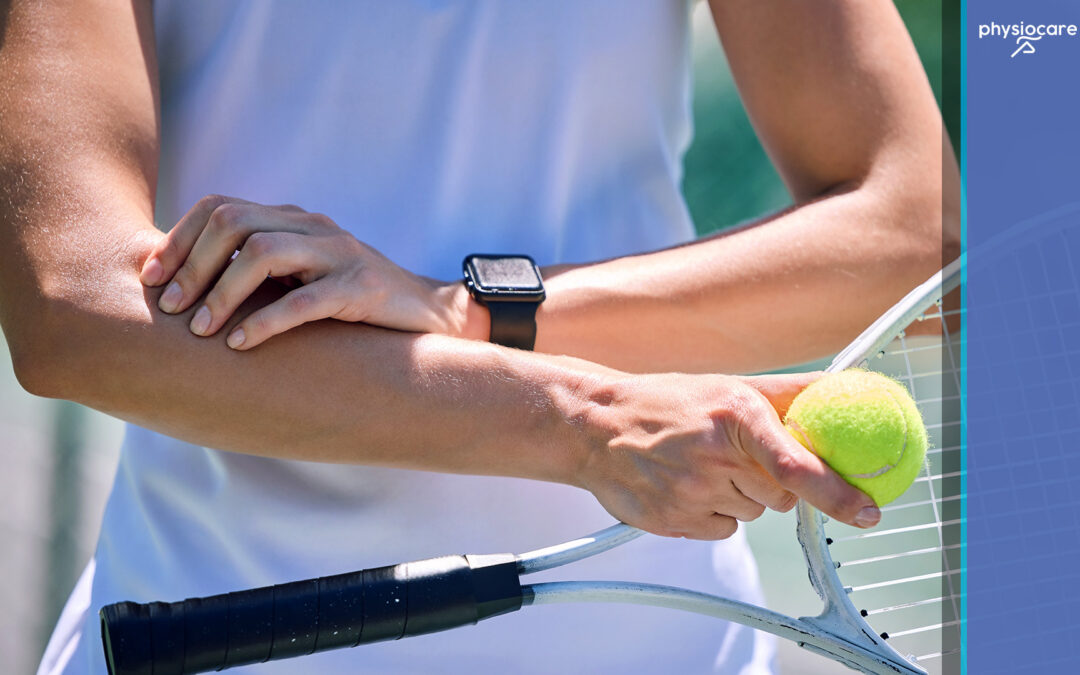
You don’t need to play tennis to get tennis elbow, and you don’t need to swing a golf club to end up with golfer’s elbow. Both names are a bit misleading, and that’s exactly why so many people dismiss the early warning signs. A dull ache on the outside or inside of the elbow gets written off as a one-off strain, right up until gripping a coffee cup or turning a door handle starts to hurt.
The truth is that these two conditions are among the most common overuse injuries physiotherapists see, and they have far more to do with repetition than with any particular sport. Understanding what’s actually happening in the tendon, and why it happens, is the first step towards recovering properly instead of just waiting for the pain to go away on its own.
What’s Actually Going On
Tennis elbow (lateral epicondylitis) and golfer’s elbow (medial epicondylitis) are both tendon injuries at the elbow, but on opposite sides of it. Tennis elbow affects the tendons on the outside of the elbow that control wrist extension. Golfer’s elbow affects the tendons on the inside, where the muscles responsible for wrist flexion and forearm rotation attach. They sit in the same family as other overuse conditions we see regularly in the clinic, such as rotator cuff issues in the shoulder.
In both cases, the injury isn’t really a sudden tear. It’s a gradual breakdown. Small, repeated loads on the tendon slowly outpace the tendon’s ability to repair itself, and over time, the tissue starts to degenerate rather than strengthen. This is the same load-related process behind conditions like Achilles tendinopathy in runners, which is why these problems tend to creep up on people rather than announce themselves with one dramatic moment of pain.
Why It Happens: The Real Causes
Once you understand that these are overload injuries rather than sport-specific ones, the list of possible causes gets a lot longer and a lot more relatable. Age, occupation, hobbies, and even how you hold a tool all play a part. Here’s where the strain actually comes from on each side of the elbow.
Tennis Elbow
Despite the name, only a small fraction of people who develop tennis elbow actually play tennis. Far more common culprits include repetitive gripping and wrist movements at work or around the house.
- Typing, using a computer mouse, or repetitive desk work
- Manual trades involving screwdrivers, hand tools, or repetitive gripping
- Gardening, painting, and DIY projects
- Racket sports with poor technique or an ill-fitting grip
The common thread is repeated wrist extension or gripping under load, done often enough that the tendon never gets a proper chance to recover between sessions.
Golfer’s Elbow
Golfer’s elbow follows the same pattern on the inside of the elbow, driven by repetitive wrist flexion and forearm rotation.
- Golf, particularly a swing that puts excessive strain through impact
- Throwing sports, including baseball and javelin
- Lifting, carrying, or repetitive manual labour
- Activities that combine gripping with a twisting motion, like using a wrench
In both conditions, age, training load that increases too quickly, and poor technique all raise the risk. So does simply not giving the tendon enough recovery time between repetitive tasks, whether that task is a backhand or a day of hedge trimming. It’s a similar story with frozen shoulder, another upper-limb condition that develops quietly until everyday movement becomes painful.
Recovering Properly: What the Evidence Supports
The encouraging news is that the vast majority of cases resolve well with the right conservative approach. Surgery is rarely needed. What matters is following a structured process rather than just resting and hoping.
- Get an accurate diagnosis first. Elbow pain can come from several structures, and treating the wrong one wastes time. A proper assessment confirms which tendon is involved and rules out other causes, using the same evidence-based physiotherapy techniques we apply across other pain conditions.
- Modify, don’t eliminate, activity. Complete rest often does more harm than good, allowing the tendon to deteriorate further. The better approach is adjusting the load, not removing it entirely, so the tendon stays active without being overwhelmed.
- Start progressive, loaded exercise early. This is the cornerstone of recovery. A gradual, structured strengthening programme, often starting with slow, controlled loading and building from there, helps the tendon rebuild its capacity rather than just settling the pain temporarily.
- Address the technique or task that caused it. Whether it’s a grip, a swing, a keyboard setup, or a repetitive work movement, if the original cause isn’t corrected, the same overload will simply happen again once you’re back to full activity.
- Be patient with the timeline. These are genuinely slow-healing tendon conditions. Meaningful improvement is often noticeable within several weeks, but full, durable recovery commonly takes a few months of consistent rehabilitation. Rushing back too early is one of the most common reasons these injuries become chronic.
- Use supportive measures where appropriate. Bracing, manual therapy, and other techniques, including sports massage and recovery tools, can help manage symptoms alongside the exercise programme, though they work best as a support to loading exercise rather than a replacement for it.
The Physiocare Approach
At Physiocare, we see tennis elbow and golfer’s elbow in office workers, tradespeople, weekend gardeners, and athletes alike, not just the sports their names suggest. Our physiotherapists assess exactly which structures are involved and build a progressive, evidence-based rehabilitation plan around your specific movement patterns and daily demands, so you’re not just easing the pain but actually resolving what caused it. Where it’s genuinely needed, that plan can also include physiotherapeutic modalities such as manual therapy, acupuncture, or different forms of electrotherapy, always decided after a proper assessment rather than applied as a default.
If you’re dealing with persistent elbow pain that hasn’t settled on its own, don’t wait for it to become a long-term problem, physiotherapy is far more effective the earlier it starts. Get in touch with our team, and let’s get you back to gripping, lifting, and moving without hesitation.